For an economy with a significant reliance on manufacturing, achieving carbon neutrality presents considerable structural challenges. While the transition may involve substantial short-term costs and societal adjustments, it is not an option that can be deferred simply due to its difficulty. Achieving carbon neutrality requires collective action from the government, industry, and society at large. In particular, interdisciplinary collaboration among experts in greenhouse gas mitigation technologies, energy transition, climate finance, and life cycle assessment is essential to develop practical and scalable solutions.
The Korea Climate and Environment Institute (KICCE) serves as a collaborative platform bringing together experts from diverse fields to advance climate action, accelerate energy transition, and address environmental challenges. We envision this platform as a cornerstone for carbon neutrality—facilitating meaningful dialogue, research, education, and public engagement.
While the journey toward carbon neutrality may be complex and challenging when undertaken individually, collective effort will ultimately lead us to our shared destination. We look forward to your continued support and active participation in the Korea Climate and Environment Institute.
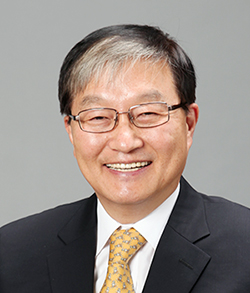
Greetings from Jeon Eui-chan
Director of the Korea Climate and Environment Institute 2026


 Related Organizations